Eyelid retraction in Valencia
DR. SONIA PEÑARROCHA
Correction of eyelid position to protect the ocular surface and restore a harmonious appearance to the eyes
What is eyelid retraction?
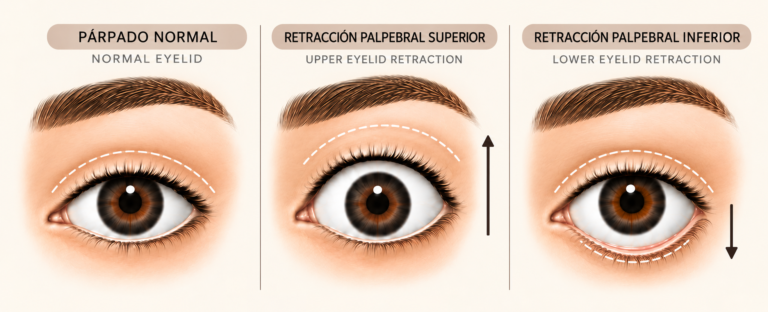
Eyelid retraction is a condition in which the eyelid sits in an abnormal position, causing excessive exposure of the eyeball. It occurs when the upper eyelid is raised above its normal position or when the lower eyelid drops, exposing a larger area of the eye.
This condition can affect one or both eyes and vary in severity. In addition to altering the appearance and symmetry of the eyes, eyelid retraction can compromise the protection and lubrication of the ocular surface, leading to dryness, irritation and other discomfort.
Eyelid retraction can have several underlying causes. For this reason, an ophthalmological assessment is essential to determine the most appropriate treatment for each patient. When indicated, eyelid retraction surgery can restore a more natural eyelid position and improve eye protection.
Symptoms of eyelid retraction
- Upper eyelid positioned too high or lower eyelid drooping.
- Eyes appearing more open than usual, with increased exposure of the ocular surface.
- Asymmetry in eyelid position, resulting in an uneven appearance of the eyes.
- Dry eyes and a gritty sensation.
- Eye irritation, redness and discomfort.
- Difficulty closing the eye completely, particularly during sleep.
- Excessive tearing in response to eye irritation.
Causes of eyelid retraction
Eyelid retraction may be present from birth or develop later in life as a result of various factors. Identifying the underlying cause is essential to determine the most appropriate treatment.
The main causes of eyelid retraction include:
Thyroid-related eyelid retraction
Thyroid eye disease, commonly associated with Graves’ disease, is one of the most frequent causes of eyelid retraction.
It occurs due to inflammation and thickening of the muscles and tissues surrounding the eye, which can cause the eyeball to protrude.
Acquired eyelid retraction
Acquired eyelid retraction develops as a result of various external factors that alter the eyelid’s natural position.
Common causes include previous surgery, trauma, burns and inflammatory conditions. It can also result from scarring or changes in the tissues surrounding the eye, which may eventually pull the eyelid out of its normal position.
Types of eyelid retraction
Eyelid retraction can be unilateral, when it affects only one eye, or bilateral, when both eyes are affected. In bilateral cases, the condition may have the same underlying cause in both eyes or result from different causes.
Depending on the area affected, there are two main types of eyelid retraction:
Upper eyelid retraction
This occurs when the upper eyelid sits higher than its normal position, exposing a larger area of the eyeball. It can make the eye appear more open and, in some cases, contribute to dryness and irritation.
Lower eyelid retraction
This occurs when the lower eyelid drops below its natural position, exposing a larger area of the white part of the eye (sclera). It can alter the contour of the eyelid and make it more difficult to protect and lubricate the ocular surface properly.
Dr Sonia Peñarrocha: ophthalmologist specialised in eyelid retraction in Valencia

Eyelid retraction can affect both the natural position of the eyelids and their ability to properly protect the ocular surface. Treating this condition requires an in-depth understanding of periocular anatomy and careful assessment of the relationship between the eyelids, the muscles involved in their movement and the eyeball.
As an ophthalmologist specialising in oculoplastic surgery, I have specific training in the diagnosis and treatment of conditions affecting the eyelids and the structures surrounding the eyes. My knowledge of ocular anatomy and function allows me to assess each case individually and plan treatment with consideration for both the harmony of the eyes and the preservation of their function.
To provide the highest standard of care, my practice is built on three core principles:
Natural-looking results
Each treatment is carefully designed to enhance your natural features, never to change them. The goal is for you to feel confident, comfortable, and like the very best version of yourself
Personalised care
Every patient is unique. I take the time to listen to your concerns, assess your individual case and explain every step of the process in a way that is tailored to your needs
Extensive training
I have extensive training in oculoplastic surgery in both Spain and the United Kingdom, including a two-year fellowship at the prestigious Moorfields Eye Hospital
Eyelid retraction treatment
Treatment for eyelid retraction depends on its underlying cause and the degree to which the eyelids are affected. Depending on the case, treating the underlying condition and relieving ocular symptoms may be sufficient, while in other situations surgery may be necessary to correct the eyelid position.
Depending on the approach, treatment can be divided into two main types:
Non-surgical treatments
In mild cases or when eyelid retraction is associated with an active underlying condition, non-surgical treatments may be used to relieve symptoms and protect the eye.
The main non-surgical treatment options for eyelid retraction include:
- Ocular lubrication: artificial tears, gels and ophthalmic ointments help keep the ocular surface hydrated and reduce dryness and irritation.
- Treatment of the underlying cause: when eyelid retraction is associated with thyroid eye disease or another inflammatory condition, treating and controlling the underlying disease is essential.
- Botulinum toxin: in selected cases, it can be used to temporarily relax the muscles responsible for elevating the eyelid and reduce retraction. Its effects are temporary, and its suitability depends on each patient.
- Corticosteroid or 5-fluorouracil injections: in selected cases, these may help reduce inflammation or scar formation in the eyelid tissues.
These measures can relieve discomfort but do not always correct the eyelid position. When retraction persists or causes excessive exposure of the eye, surgery may be necessary.
Surgical treatment
When eyelid retraction cannot be corrected with conservative treatments or causes excessive exposure of the ocular surface, surgery may be required.
Surgery aims to restore the eyelid’s natural position using different techniques, selected according to whether the upper or lower eyelid is affected, the severity of the condition and the tissues involved.
Upper eyelid retraction
- Müller's muscle resection (Müllerectomy): reduces the action of this muscle, which contributes to elevating the upper eyelid.
- Levator aponeurosis recession: involves releasing and repositioning the structure that transmits the force of the levator muscle to the eyelid, thereby reducing excessive elevation.
- Full-thickness blepharotomy: involves making a controlled incision through the eyelid layers to release the structures responsible for the retraction.
Lower eyelid retraction
- Lower eyelid retractor recession: releases and repositions the structures responsible for pulling the eyelid downwards, allowing it to return to a higher position.
- Midface lift: elevates the cheek tissues and can help support the lower eyelid, particularly when retraction is associated with sagging of these tissues.
- Spacer graft placement: uses tissue from the patient's own body or specific materials to provide support and increase eyelid height when there is tissue shortage or significant retraction.
What is eyelid retraction surgery like?
Eyelid retraction surgery requires careful planning and a detailed understanding of eyelid anatomy and the surrounding structures. Every patient has different characteristics, so I carry out an individualised assessment of eyelid position, the degree of retraction and the condition of the ocular surface to determine the most appropriate surgical approach.
The main stages of eyelid retraction surgery are:
1. Initial consultation and personalised assessment
During the initial consultation, I assess eyelid position and the degree of retraction, as well as symmetry between both eyes and exposure of the ocular surface. I also evaluate the underlying cause and any associated symptoms to understand each patient’s needs.
2. Individualised surgical planning
Following the assessment, I determine the most appropriate surgical technique for each case. Planning takes into account whether the upper or lower eyelid is affected, the structures involved and the degree of correction required to restore an appropriate eyelid position.
3. Surgical procedure
The procedure is performed using the selected surgical technique. During surgery, I adjust the tension and position of the affected tissues to correct eyelid retraction, improve protection of the ocular surface and restore greater symmetry to the eyes.
4. Postoperative follow-up
After surgery, I provide personalised follow-up care to monitor recovery and ensure the eyelids are healing in the correct position. I also provide the necessary postoperative instructions and answer any questions that may arise during recovery.
Recovery and postoperative care after eyelid retraction surgery
Recovery after eyelid retraction surgery is usually gradual and depends on the surgical technique used and each patient’s individual characteristics. During the first few days, swelling, bruising and mild discomfort may occur around the treated area. These symptoms gradually subside as the healing process progresses.
It is important to follow your ophthalmologist’s instructions and attend all scheduled follow-up appointments to monitor recovery and ensure the eyelids are healing in the correct position.
Aftercare following eyelid retraction surgery
To promote proper recovery and protect the ocular surface, it is essential to follow your doctor’s instructions after surgery.
Some of the main recommendations include:
Apply cold compresses during the first few days to help reduce swelling, following your doctor’s instructions.
Keep the treated area and incisions clean to prevent complications.
Use prescribed ophthalmic medication, such as eye drops or ointments, to protect the ocular surface and support healing.
Avoid strenuous physical activity for the recommended period.
Do not rub or put pressure on your eyelids to prevent discomfort and promote proper healing.
Avoid direct sun exposure to the treated area during recovery.
Attend all scheduled follow-up appointments to monitor postoperative recovery and eyelid position.
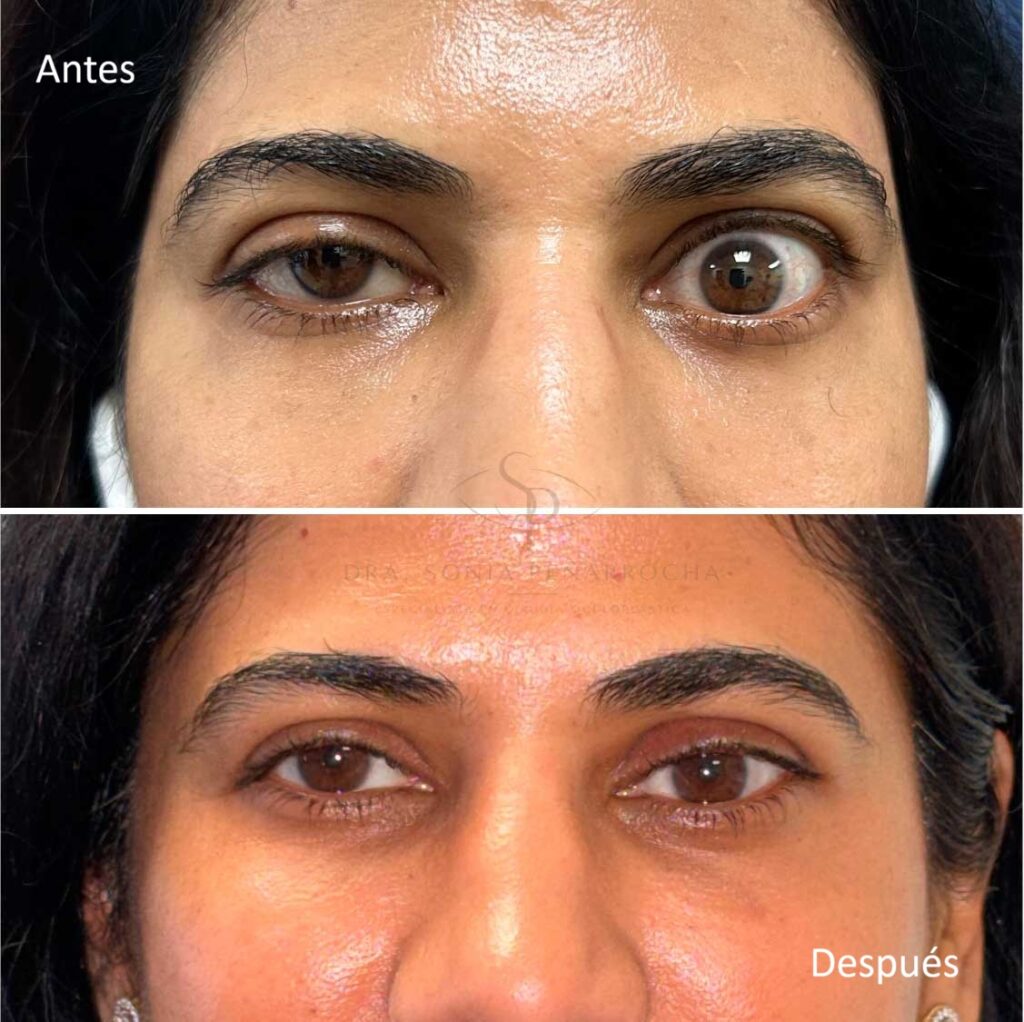
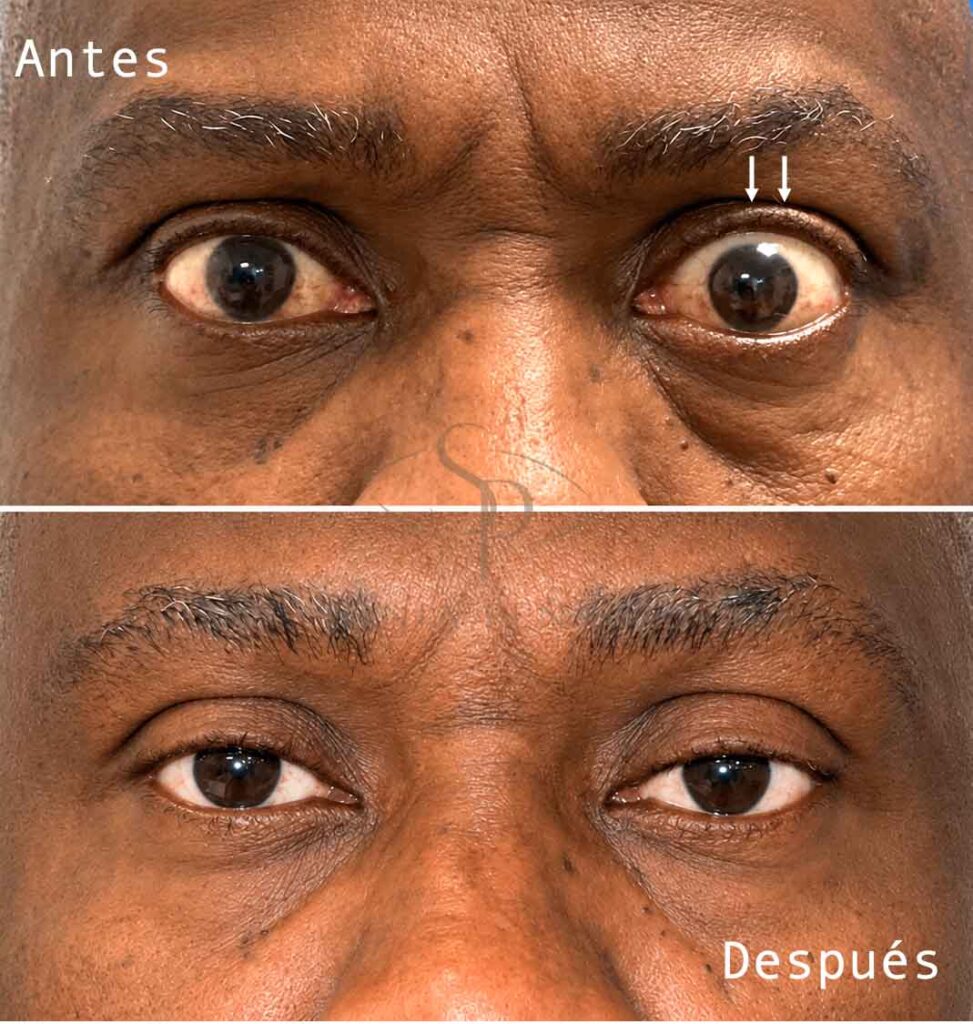
Eyelid retraction: before and after
Do you have any doubts?
I’m here to help you. Feel free to contact me if you have any questions or concerns.
Patient reviews of eyelid retraction treatment in Valencia
THANK YOU FOR YOUR TRUST

 Paula Jover
Trustindex verifica que la fuente original de la reseña sea Google.
La doctora Peñarrocha es una excelente profesional, trabajadora incansable, meticulosa y perfeccionista. Hace 2 meses me realizó una blefaroplastia superior e inferior, me orientó e informó muy bien, explicándome todo el proceso, tanto antes de la intervención como durante el periodo de recuperación. Estoy muy contenta con el resultado, volvería a hacerlo sin dudarlo, la recomiendo 100% Joaquina Marin SolerPonerse en las manos de la Dra Peñarrocha es ponerse en manos de angel. Estoy muy agradecida por la blefafoplastia superior e inferior que me hizo hace un mes y medio.
 Lourdes LorenzoHola soy una paciente intervenida de blefaroplastia superior e inferior por la Dra Peñarrocha y estoy muy satisfecha con los resultados despues de un mes de la intervencion.He de destacar su gran profesionalidad y el trato tan cercano que he tenido con ella en todo momento.Sin duda la recomiendo y depositaria mi confianza en ella otra vez
 Basi Garcia GonzalezHola, soy una paciente de la Dra. Peñarrocha, he sido intervenida de blefaroplastia superior e inferior y estoy encantada con el resultado y el trato que he recibido. Si algo he de destacar de la doctora es el excepcional trato humano desde que iniciamos el proceso en consulta así como su gran profesionalidad antes y después de la intervención. Me volvería a operar con ella sin dudar, estoy muy feliz de haber dado el paso de dejarme en sus manos
 Enrique Gimeno CarpioLa Dra.Peñarrocha es una gran profesional , estoy muy satisfecho con su trato tan agradable y con el resultado de su intervención de blefaroplastia y conjuntivomullerectomia
 Vane SaMe realicé una blefaroplastia hace un mes y los resultados son espectaculares. La Dra. Peñarrocha fue en todo momento muy atenta y cercana, explicándome todos los detalles de la intervención y de los cuidados posteriores y aclarando todas mis dudas. La intervención se lleva muy bien y la recuperación es muy rápida. Fue un acierto confiar en ella. La recomiendo 100%.
 Andrea M.NMe realicé una hidratación de labios con la doctora y quedé encantada con el resultado. Unos labios naturales pero jugosos, con aspecto rejuvenecido. Tanto la atención prestada como la calidad de la técnica son dos aspectos a destacar con Sonia. Sin duda, la recomiendo al 100%. De verdad, si tenéis la oportunidad acudid a su consulta.
 Neus LluchGran profesional en oftalmología y cirugía oculoplastica. Intervenida de flefaroplastia con un resultado espectacular. Estoy contentísima. Muy recomendable, atenta y empática. Volveré siempre que lo necesite
 Beatriz Lopez navarroExcelente experiencia con la Dra. Peñarrocha en mi blefaroplastia Desde el primer momento, su trato fue excepcional. Me transmitió una gran confianza y seguridad, explicándome el procedimiento con mucha claridad y respondiendo a todas mis dudas con paciencia y profesionalismo. La delicadeza con la que realizó la intervención me sorprendió. Su habilidad y precisión son notorias, y el resultado no pudo ser mejor. La cirugía fue indolora y la recuperación mucho más rápida de lo que esperaba. Además, su atención postoperatoria ha sido impecable, siempre disponible para resolver cualquier duda . Lo que más me impactó de la Dra. Peñarrocha fue su enfoque humano. Me sentí cuidada y apoyada en todo momento, algo que es muy importante cuando se realiza una intervención.Gracias a Sonia ,no solo he mejorado mi apariencia, sino que también me siento mucho más segura y feliz con los resultados.
Frequently asked questions about retracted eyelids
When is surgery necessary for a retracted eyelid?
Surgery may be recommended when eyelid retraction causes excessive eye exposure, persistent dryness or irritation, difficulty closing the eyelids completely or a significant change in eyelid position. The decision depends on the underlying cause, the degree of retraction and each patient’s symptoms.
Does eyelid retraction surgery leave a scar?
The visibility of scars depends on the surgical technique used. Incisions can be made behind the eyelid, leaving no visible external scar, or through the skin, following the natural eyelid creases. In the latter case, scars are usually discreet and become less noticeable over time.
How long does eyelid retraction surgery take?
Eyelid retraction surgery usually takes between 45 minutes and 1.5 hours, although the duration may vary depending on the affected eyelid, the severity of the retraction and the surgical technique used.
Is eyelid retraction surgery painful?
The procedure is performed under anaesthesia to prevent pain during surgery. Afterwards, mild discomfort, swelling or a feeling of tightness around the treated area may occur. These symptoms usually subside gradually during recovery.
Can eyelid retraction return after surgery?
Although surgery aims to achieve long-lasting correction, eyelid retraction may recur in some cases. This can depend on the underlying cause, the healing process and how the tissues change over time. For this reason, ophthalmological follow-up after surgery is important.
How much does eyelid retraction surgery cost in Valencia?
The cost of eyelid retraction surgery in Valencia depends on the complexity of the case, the affected eyelid and the surgical technique required. An individual ophthalmological assessment is necessary to determine the cost of the procedure.
Book an appointment for eyelid retraction treatment in Valencia
Have you noticed that one of your eyelids sits higher or lower than usual, and are you experiencing dryness, irritation or eye discomfort?
I am Dr Sonia Peñarrocha, an ophthalmologist specialising in oculoplastic surgery and eyelid retraction treatment in Valencia. I provide personalised assessments to examine your eyelid position, the degree of retraction and the condition of your ocular surface, helping determine the most appropriate treatment for your needs.
If you would like to correct your eyelid position, improve eye protection and restore harmony to your eyes, get in touch using the contact form and take the first step towards treatment tailored to your needs.