Lacrimal duct surgery in Valencia
DR. SONIA PEÑARROCHA
Specialised treatment for obstructions and
alterations in the lacrimal system.
Tears play a fundamental role in protecting and lubricating the eyes. Naturally, they drain into the nose through the tear duct system. However, when this system becomes blocked or does not function properly, tears cannot be properly drained, leading to constant tearing, eye irritation, recurrent infections, or discomfort in daily life.
Beyond physical discomfort, constant tearing can affect quality of life and personal confidence. Many people experience persistent irritation around the eyes, difficulty applying makeup, or the need to constantly wipe away tears, which impacts their daily well-being.
As an ophthalmologist specialised in lacrimal duct surgery in Valencia, my goal is to help you regain ocular comfort and restore the proper function of the lacrimal system through an accurate diagnostic approach and personalized treatment.
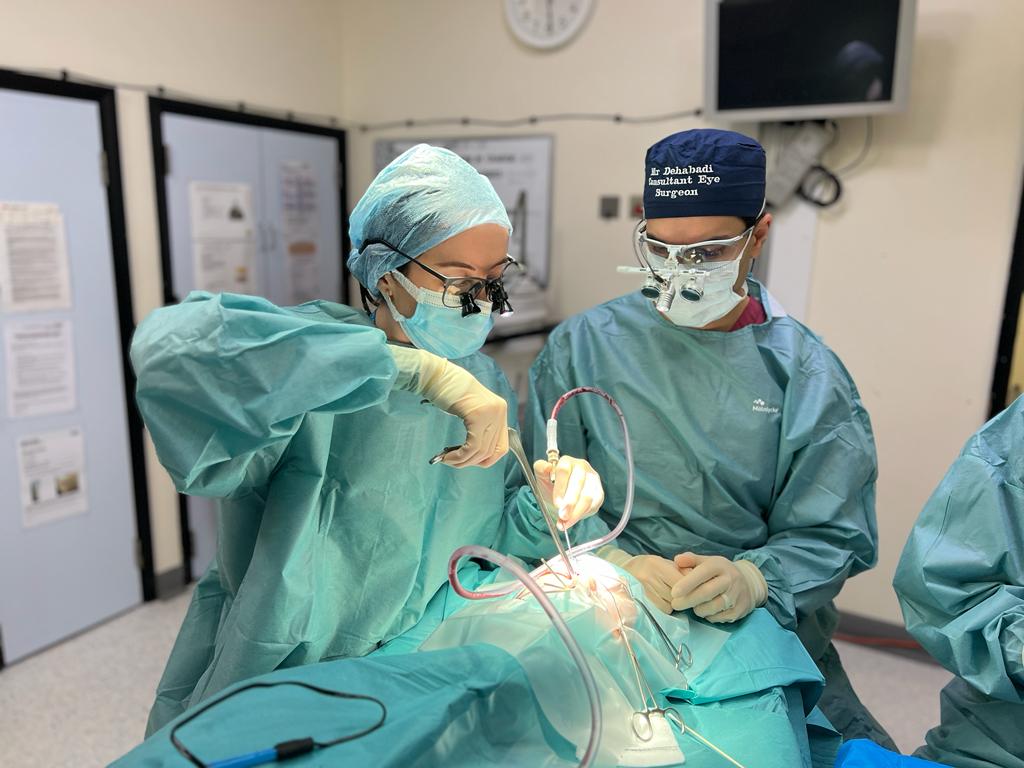
What does lacrimal duct surgery involve?
The lacrimal system is responsible for draining tears from the eye into the nose. When the tear duct becomes blocked, tears cannot drain properly and symptoms such as constant tearing, recurrent infections, or bothersome discharge may occur.
Tear duct surgery aims to restore this natural drainage. The most common procedure is dacryocystorhinostomy (DCR), in which a new connection is created between the eye and the nose, allowing tears to flow normally again.
It is a safe and highly effective surgery that significantly improves the patient’s quality of life.
Dacryocystorhinostomy: how the surgery is performed
Dacryocystorhinostomy (DCR) is the most commonly performed surgery to treat tear duct obstruction. The aim of the procedure is to create a new connection between the lacrimal sac and the nose in order to restore normal tear drainage and eliminate constant tearing.
There are different surgical techniques, and the choice of approach depends on each patient’s anatomical characteristics, the type of obstruction, and any previous medical history. The goal is always to achieve the best functional outcome with the least possible aesthetic impact.
These are the two types of tear duct surgeries that I perform:
External DCR
External dacryocystorhinostomy is performed through a small skin incision, strategically placed within the natural crease next to the eye so that the scar becomes practically imperceptible over time.
This approach allows excellent anatomical visualization of the lacrimal system and offers a high success rate, especially in complex cases or in patients who have undergone previous surgery.
Endonasal DCR
Endonasal tear duct surgery is performed from inside the nose using endoscopic techniques, avoiding any external skin incisions.
This technique allows treatment of tear duct obstruction without visible scars and is usually associated with a quick recovery. The choice of this approach depends on each patient’s anatomical characteristics and the type of obstruction.
Postoperative period after tear duct surgery
The postoperative period after tear duct surgery is usually well tolerated, and most patients return to their usual activities within a few days.
However, there are some aspects to keep in mind:
- In the first few days, it is normal to experience mild swelling, slight nasal bleeding, or a feeling of congestion.
- In the case of external dacryocystorhinostomy, a small bruise may appear around the incision area.
- It is recommended to avoid strenuous activities during the first two weeks.
- Small silicone tubes are often placed in the tear duct to keep it open during the healing process; these are later removed in the clinic in a simple procedure.
- Postoperative follow-up is essential to ensure proper healing and to optimize long-term results.
Why choose me for your lagrimal duct surgery in Valencia?
Natural-looking results
Each treatment is carefully designed to enhance your natural features, never to change them. The goal is for you to feel confident, comfortable, and like the very best version of yourself
Personalised care
Every patient is unique. I take the time to listen to your concerns, assess your individual case and explain every step of the process in a way that is tailored to your needs
Extensive training
I have extensive training in oculoplastic surgery in both Spain and the United Kingdom, including a two-year fellowship at the prestigious Moorfields Eye Hospital
Do you have any doubts?
I am here to help you. Feel free to contact me with any questions or concerns.
Patient testimonials in Valencia
THANK YOU FOR YOUR TRUST
Trustindex verifica que la fuente original de la reseña sea Google. La doctora Peñarrocha es una excelente profesional, trabajadora incansable, meticulosa y perfeccionista. Hace 2 meses me realizó una blefaroplastia superior e inferior, me orientó e informó muy bien, explicándome todo el proceso, tanto antes de la intervención como durante el periodo de recuperación. Estoy muy contenta con el resultado, volvería a hacerlo sin dudarlo, la recomiendo 100%Trustindex verifica que la fuente original de la reseña sea Google. Ponerse en las manos de la Dra Peñarrocha es ponerse en manos de angel. Estoy muy agradecida por la blefafoplastia superior e inferior que me hizo hace un mes y medio.Trustindex verifica que la fuente original de la reseña sea Google. Hola soy una paciente intervenida de blefaroplastia superior e inferior por la Dra Peñarrocha y estoy muy satisfecha con los resultados despues de un mes de la intervencion.He de destacar su gran profesionalidad y el trato tan cercano que he tenido con ella en todo momento.Sin duda la recomiendo y depositaria mi confianza en ella otra vezTrustindex verifica que la fuente original de la reseña sea Google. Hola, soy una paciente de la Dra. Peñarrocha, he sido intervenida de blefaroplastia superior e inferior y estoy encantada con el resultado y el trato que he recibido. Si algo he de destacar de la doctora es el excepcional trato humano desde que iniciamos el proceso en consulta así como su gran profesionalidad antes y después de la intervención. Me volvería a operar con ella sin dudar, estoy muy feliz de haber dado el paso de dejarme en sus manosTrustindex verifica que la fuente original de la reseña sea Google. La Dra.Peñarrocha es una gran profesional , estoy muy satisfecho con su trato tan agradable y con el resultado de su intervención de blefaroplastia y conjuntivomullerectomiaTrustindex verifica que la fuente original de la reseña sea Google. Me realicé una blefaroplastia hace un mes y los resultados son espectaculares. La Dra. Peñarrocha fue en todo momento muy atenta y cercana, explicándome todos los detalles de la intervención y de los cuidados posteriores y aclarando todas mis dudas. La intervención se lleva muy bien y la recuperación es muy rápida. Fue un acierto confiar en ella. La recomiendo 100%.Trustindex verifica que la fuente original de la reseña sea Google. Me realicé una hidratación de labios con la doctora y quedé encantada con el resultado. Unos labios naturales pero jugosos, con aspecto rejuvenecido. Tanto la atención prestada como la calidad de la técnica son dos aspectos a destacar con Sonia. Sin duda, la recomiendo al 100%. De verdad, si tenéis la oportunidad acudid a su consulta.Trustindex verifica que la fuente original de la reseña sea Google. Gran profesional en oftalmología y cirugía oculoplastica. Intervenida de flefaroplastia con un resultado espectacular. Estoy contentísima. Muy recomendable, atenta y empática. Volveré siempre que lo necesiteTrustindex verifica que la fuente original de la reseña sea Google. Excelente experiencia con la Dra. Peñarrocha en mi blefaroplastia Desde el primer momento, su trato fue excepcional. Me transmitió una gran confianza y seguridad, explicándome el procedimiento con mucha claridad y respondiendo a todas mis dudas con paciencia y profesionalismo. La delicadeza con la que realizó la intervención me sorprendió. Su habilidad y precisión son notorias, y el resultado no pudo ser mejor. La cirugía fue indolora y la recuperación mucho más rápida de lo que esperaba. Además, su atención postoperatoria ha sido impecable, siempre disponible para resolver cualquier duda . Lo que más me impactó de la Dra. Peñarrocha fue su enfoque humano. Me sentí cuidada y apoyada en todo momento, algo que es muy importante cuando se realiza una intervención.Gracias a Sonia ,no solo he mejorado mi apariencia, sino que también me siento mucho más segura y feliz con los resultados.
Frequently asked questions about lacrimal duct surgery
What is tear duct surgery?
The aim of the surgery is to treat the blockage and create a new pathway for tears to drain properly into the nose. This helps improve excessive tearing and reduces the risk of infections.
What treatments are available for excessive tearing?
If excessive tearing is caused by a blockage in the tear duct system, the surgical technique will depend on the level of the obstruction. If the problem affects the entrance of the duct, a minor procedure called a “punctoplasty” can be performed. If the obstruction is located further down the drainage system, a dacryocystorhinostomy (DCR) may be required.
What is a dacryocystorhinostomy?
It is a surgical procedure in which a new channel is created between the lacrimal sac and the nose to allow tears to drain properly. It can be performed through a small skin incision near the eye or through the nose using an endoscope.
Does tear duct surgery hurt?
Tear duct surgery is usually performed under general anesthesia, so the patient does not feel any pain during the procedure. After surgery, discomfort is generally mild and can be easily controlled with common painkillers.
How long does the surgery take?
It usually lasts around one hour, but you will need to stay in the hospital for a few more hours until you have fully recovered from the general anesthesia.
What are the risks?
Like any surgery, it carries some risks, although they are uncommon. The risk of infection is low and is usually well managed with antibiotics. Mild bleeding after DCR is normal and expected, but in most cases it can be managed at home — we will explain how to do this. The success rate of the surgery is approximately 90%, but in some cases tearing may persist; if this happens, a secondary procedure can be considered.
How long does recovery take after lacrimal duct surgery?
Initial recovery is usually quick, and many patients can return to their usual activities within a few days. However, the complete healing process and final stabilization of the result may take several weeks.
When will I notice improvement after surgery?
Many patients experience improvement from the first few days after surgery, especially in tearing and associated discomfort. However, the final result is assessed once the healing process has been completed.
Is lacrimal duct surgery permanent?
The success rate is high, but as with any procedure, there is a small percentage of cases in which a revision or additional surgery may be necessary.
Will I have a scar?
With the endonasal approach, there is no visible scar. With the external approach, the incision is very small —approximately 1 cm— and is discreetly placed within the natural crease beneath the lower eyelid, so it generally becomes almost imperceptible within a few months after surgery.
How much does lacrimal duct surgery cost in Valencia?
The cost of tear duct surgery depends on several factors, such as the surgical technique used, the type of obstruction, and each patient’s specific needs. For this reason, every case requires a personalised assessment in order to determine the most appropriate treatment and provide an individualised estimate.
Request your appointment for lacrimal duct surgery in Valencia
Do you suffer from constant tearing or eye discomfort?
I am Sonia Peñarrocha, an ophthalmologist specializing in tear duct surgery in Valencia. I provide personalized evaluations to diagnose and treat tear duct obstruction and other functional disorders of the lacrimal system, always through a precise medical approach tailored to each patient.
If you would like to improve your eye comfort and regain your quality of life safely and effectively, contact me through the form and take the first step toward a personalized solution for your condition.